
The Order of the Black Ledger

The Ledger opened before the first Steward arrived.
Every archive reaches a point where memory becomes the primary material. The Black Ledger is that point. It is the permanent record of the Milostate collection’s ongoing life. Every Stewardship act, every stone issued, every viewing attended, every state of the Work that has surfaced or dissolved. is recorded and kept beyond loss.
The Ledger Holdings
The Ledger is maintained in two ways.
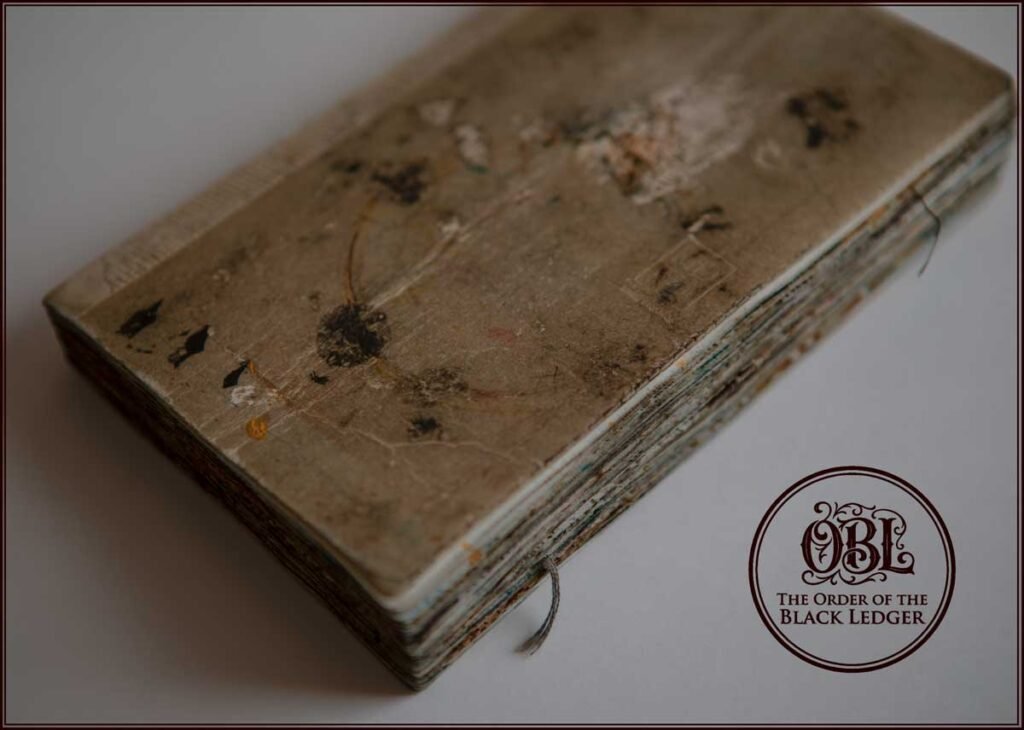
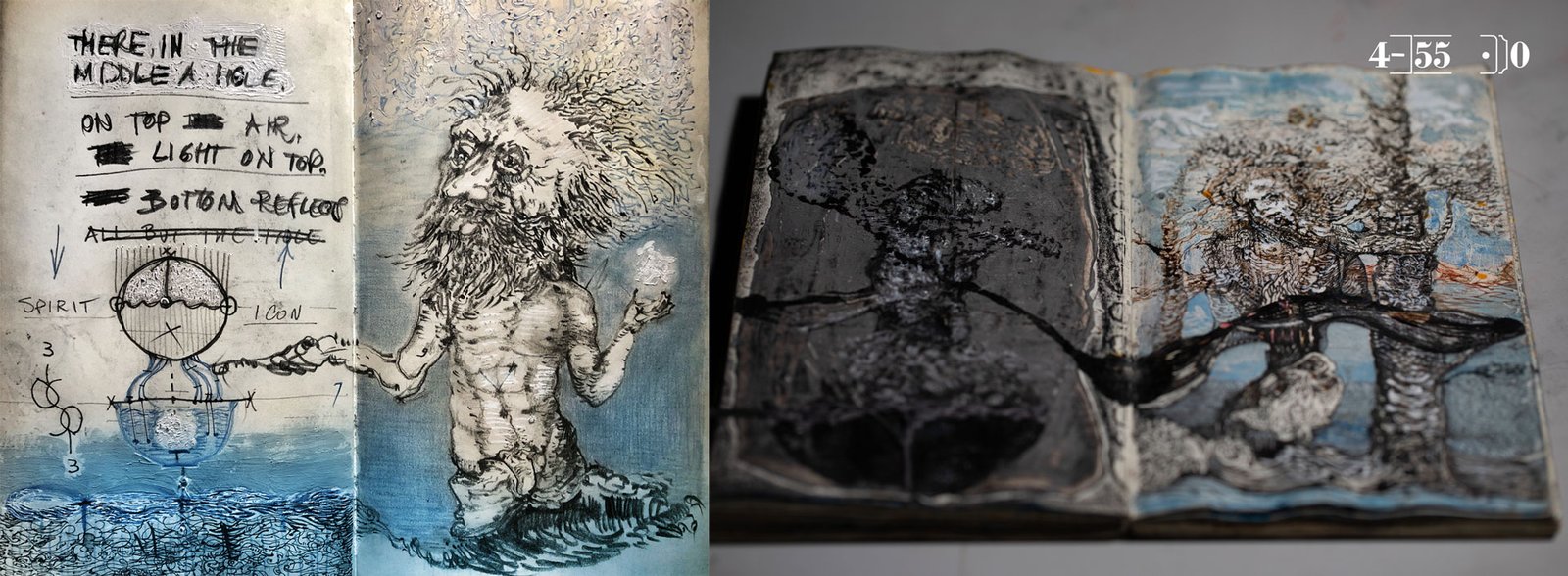
The first is physical and private: a bound volume, kept under the Order’s discretion, handwritten, or rather drawn, in the manner of archetypal register. A sacred object. It smells of smoke. It is deteriorating and alive. Its pages accept ink once. Corrections are not made. Circumstances are annotated.
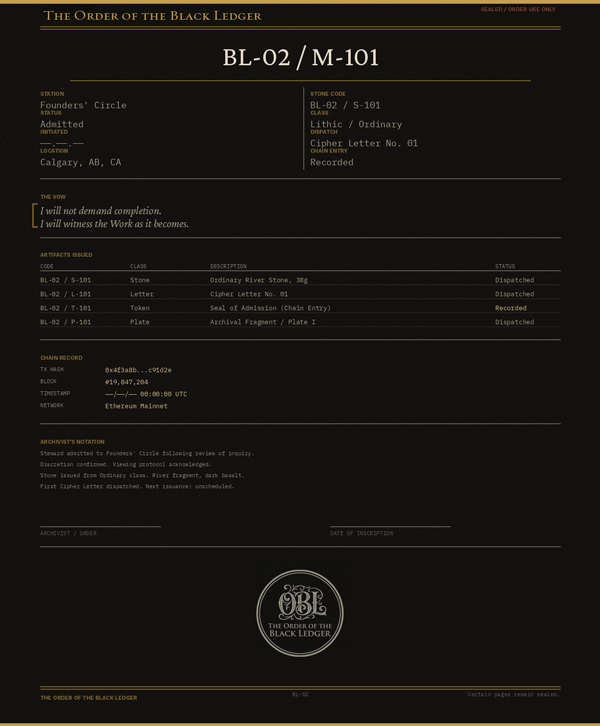
The second is permanent and public: every entry in the Black Ledger is recorded on the blockchain as a certificate of testimony. A cryptographic inscription that will outlast the book and this institution.
The recorded code assigned to your Stewardship (BL-## / M-###) becomes a fixed coordinate in a decentralized ledger that no single authority controls. It cannot be amended. It cannot be erased. It persists in the distributed memory of a system designed to survive decay and collapse.
The two records mirror each other. The handmade and the cryptographic. The page and the hash. What the ink records, the token confirms.
Purpose
The work itself is unstable, as is the artist. Milo is persistent and the work is in constant danger of further modifications, gouging, scratching and blackening. The work also erodes and damage from the fire persists. The surfaces that were, are no longer.
The Ledger preserves what happened. It creates the immovable record of a mutable thing. The Ledger carries the biography of the collection across time, including the great fire and the years of restoration. The Ledger records Stewardship and The Witness.
Stewards appear in public records. The Ledger knows who was present and when.
The Ledger as entity
The Black Ledger accepts entries from the Order and confirms them through a decentralized protocol. No single author controls the record. The chain becomes the authority.
The Order does not speak often. When it does, it issues Cipher Letters and Ledger entries. Field dispatches from the living archive to those inscribed within its pages. These are the Order’s communications. Issued irregularly, addressed specifically to The Steward and The Witness.
To receive a Cipher Letter is to receive a transmission from The Order itself.
Entry and inscription
Admission to the Order results in inscription. Your record code is assigned by the Order and registered on-chain at the moment of acceptance. From that date forward, the Ledger carries your name in connection with the archive.
The inscription is permanent.
Your Stewardship may evolve. The station may change. The Work will certainly transform. But the original entry remains. A fixed mark in the chain, a line in the handwritten volume, a fact in the permanent memory of the Order.
The Ledger does not forget. It was built to remember what fire didn’t reach.
THE ORDER OF THE BLACK LEDGER
Certain pages remain sealed.